Set up and facilitate rituals
Daily stand-up, sprint planning, backlog refinement, review and retrospective, with the right cadence (Scrum, Kanban or hybrid) and facilitation focused on decisions and actions.
Expertise · Agile coordination
The Scrum Master keeps delivery flowing by making blockers visible and team discussions useful. At Etixio, agile coordination is part of our delivery teams: it enables engineers in Madagascar or Mauritius and your own teams to deliver at a steady pace, with clear priorities and commitments that are kept.
Understanding the role
Agile coordination helps a team work with understandable priorities, useful discussions and obstacles that get dealt with. The Scrum Master role supports the use of the Scrum framework and the improvement of how the team works together. It replaces neither product decisions nor the developers’ technical responsibility.
The Scrum Master is not a traditional project manager. They facilitate rituals and decisions, guide the team toward autonomy, shield it from disruptions and remove the blockers that slow delivery. They improve the system of work rather than managing people.
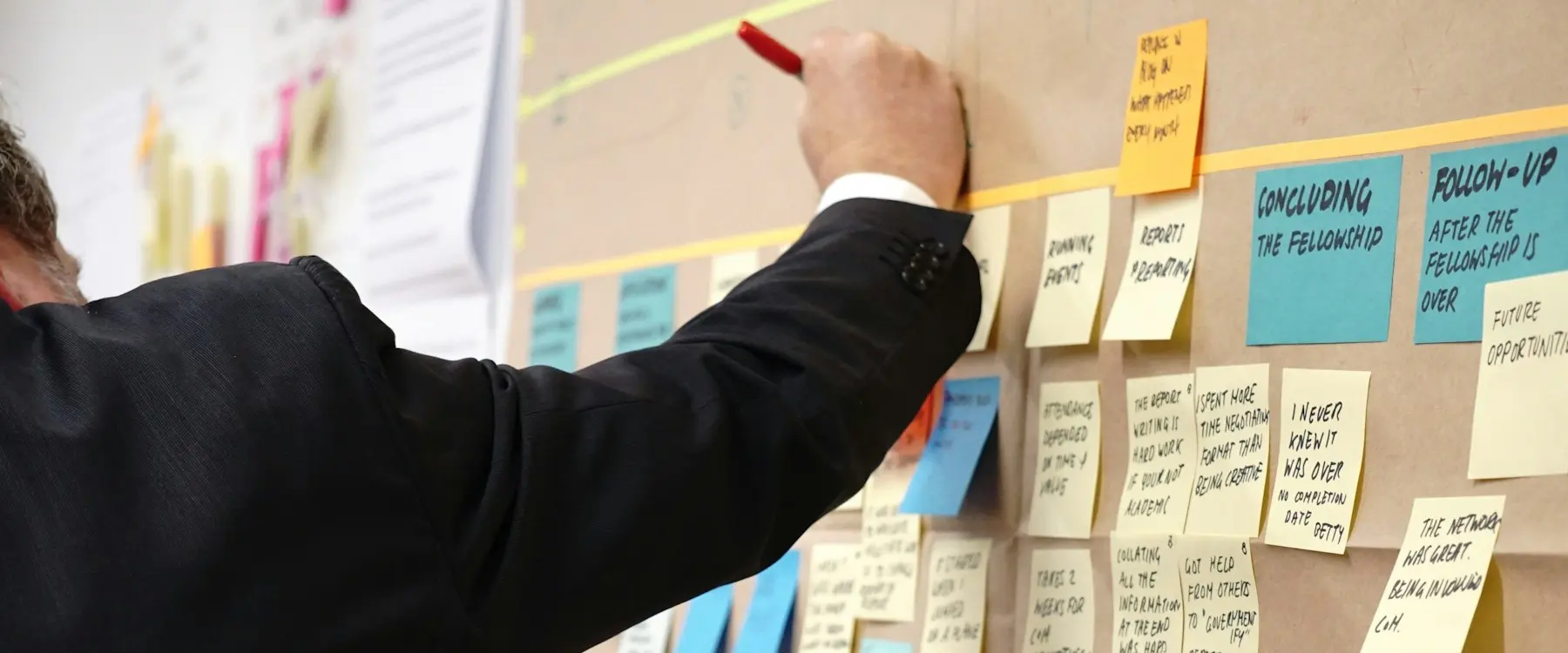
The Scrum Master’s role
Daily stand-up, sprint planning, backlog refinement, review and retrospective, with the right cadence (Scrum, Kanban or hybrid) and facilitation focused on decisions and actions.
Identify technical, organizational or human blockers, coordinate stakeholders (product, IT, operations, security) and follow actions through to resolution.
Build an improvement plan from recurring problems, track flow metrics (cycle time, throughput, predictability, quality) and reduce interruptions and context switching.
Help developers, QA and the product owner with estimation, story splitting, limiting work in progress, the Definition of Ready and the Definition of Done.
Prepare the backlog with the product owner, ease communication between business and technical teams, and manage expectations on scope, risks and schedule.
Our scope of work
Give a clear purpose to stand-ups, demos and retrospectives.
Handle dependencies and clarify the expected approvals.
Observe the workflow and experiment with organizational changes.
The right time
Frequent delays, shifting priorities or progress that is hard to track.
Reduce dependencies and shield the team from outside requests.
Establish good practices from the launch of a product or a new team.
Facilitate alignment across teams, sites and stakeholders, especially in a distributed organization.
Improve predictability and establish continuous improvement based on observed results.
In the field
If releases are regularly disrupted by urgent requests, we make their origin and impact visible. Wait times, approvals and dependencies are reviewed with the people involved. The team can then adapt its organization and prioritization rules rather than simply adding more status meetings.

Our approach
Our Scrum Masters take a pragmatic approach. They put in place the practices that bring real value, make priorities, risks and actions visible, and strengthen alignment between product and engineering. They work with Scrum, Kanban, Scrumban and Lean principles, and with your tools (Jira, Confluence, Notion, Miro, Azure DevOps).
Agile coordination of a dedicated team that builds your product, with a 1- to 3-hour time difference from Paris.
Setting up the agile framework, rituals and tools to start on an aligned footing.
Help with refining, prioritizing and structuring a backlog the team can work from.
Assessment of practices, organization and delivery, with a prioritized action plan.
For an overview of the framework, see our Agile Scrum for IT projects expertise and our article on managing an outsourced team with agile.
The choices that matter
Rituals should not take over the time meant for the work they are supposed to support. We look at the decisions made and the problems actually resolved. The framework must account for distributed teams, business availability and delivery constraints, with responsibilities everyone can understand.
From work to deliverables
The scope of the engagement specifies the organization to put in place or improve and the acceptance criteria. We prepare what is needed to understand the changes, verify them and continue the work.
Frequently asked questions
The facilitator of the agile team. They run Scrum rituals, remove obstacles, foster collaboration and support continuous improvement so the team delivers at a steady pace.
The product owner sets priorities and manages the backlog. The Scrum Master focuses on how the team works, the flow of delivery and agile practices. The two roles are complementary.
The project manager plans and drives execution. The Scrum Master does not assign work; they improve the system in which the team organizes itself and remove what is blocking it.
When delivery lacks predictability, when the team faces recurring blockers, when a new team is starting or when several teams need to coordinate better.
Less friction, better visibility on progress, more effective dependency management, a more autonomous team and retrospectives that lead to concrete actions.
Yes. With Kanban, Scrumban or a hybrid method, they support facilitation, coordination and continuous improvement. These principles hold regardless of the framework.
The small time difference between Paris and Madagascar or Mauritius makes it possible to hold rituals during shared working hours. The Scrum Master ensures visibility on progress, client-side approvals and clear written communication.
By breaking it down into verifiable increments, with a set of evaluation examples included in the Definition of Done. An AI feature is done when it meets the agreed accuracy, response time and cost criteria, not when a demo works.
Tell us about your team, how you work and the issues you are facing. We will review the initial scope for improvement with you.