Software & AI · From strategy to production

Our method

Software Development Process: From Business Need to Delivered Software

In dedicated teams as in projects, our engineers are overseen by our tech leads and CTO and follow the same engineering standard. On a project, each stage produces a result your team can review: a scope, a decision, a feature or a service ready to run.

A free 30-minute video call, with no commitment, followed by a written summary with a ballpark estimate.

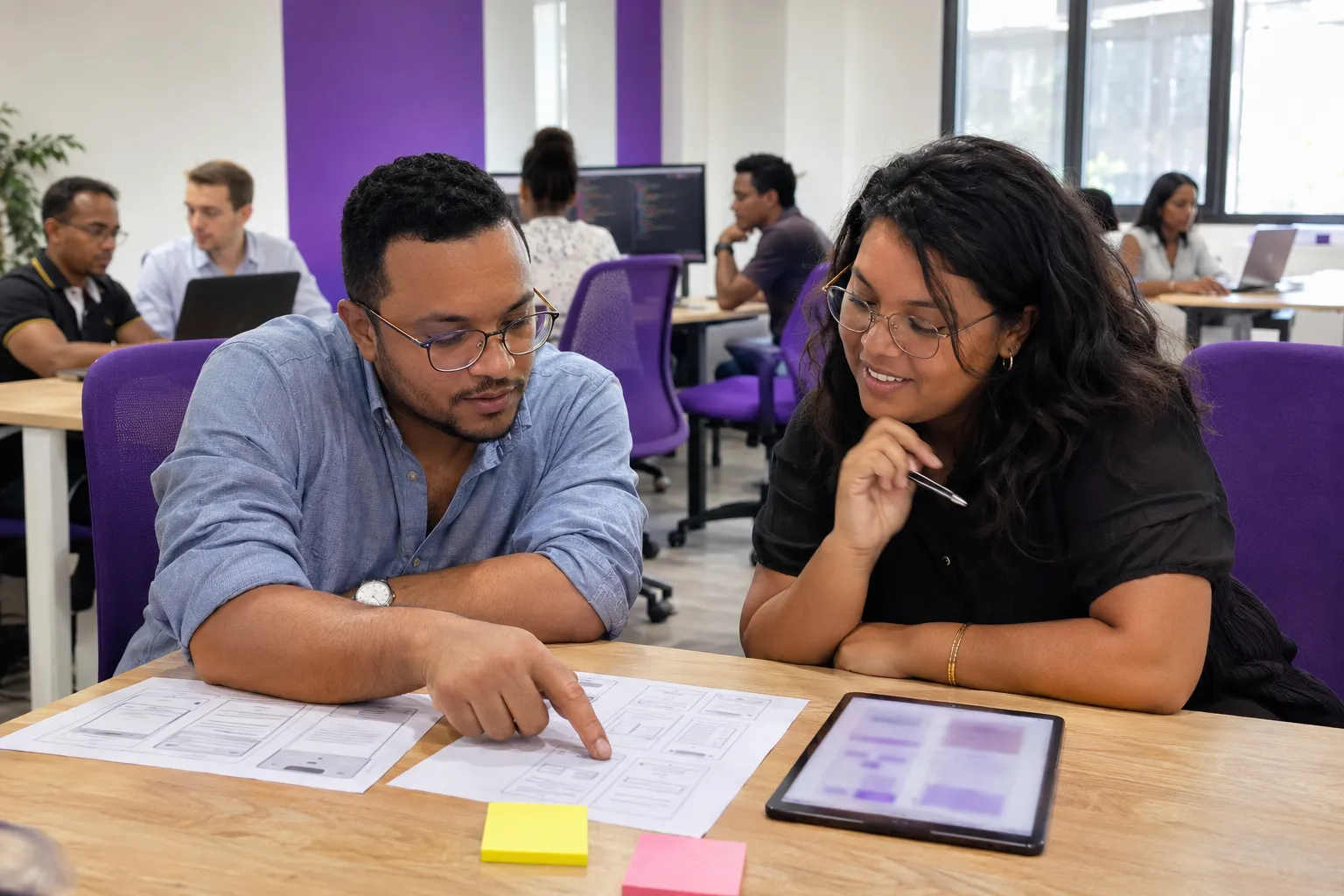
A product owner and a designer reviewing wireframes

The four stages

Our software development process, step by step.

Scope uses and dependencies

We start from real operations: who uses the product, what information is needed and which rules must be followed. Discussions with business teams and technical leads bring integrations, data constraints and success criteria to light. Assumptions that are still open are kept separate from decisions already made.

You validate priorities and business cases. We prepare a scope, the dependencies and the inputs needed for estimation.
Design user journeys and architecture

Mockups, API contracts and data models describe the same feature from several angles. Our tech leads oversee the architecture and discuss with you the choices that affect maintenance, operations or the product’s evolution. Error cases and permissions are handled alongside the main user journey.

You review the journeys and trade-offs. We document components, interfaces and key decisions.

Build and verify feature by feature

Development moves forward in demonstrable increments. Every change goes through code review and continuous integration, while demos let us check behavior with users. Any new request is discussed based on its impact on the scope and on the rest of the delivery.

You take part in business validation. We deliver code, tests and tracking of issues and decisions.

Go live and hand over

Production is prepared with environments, configurations, access and procedures. Acceptance testing verifies the agreed criteria. Everything needed to operate and take over the software is handed over, then support and further improvements are organized according to the agreed framework.

You approve the go-live within your organization. We prepare deployment, documentation and follow-up of the delivered scope.
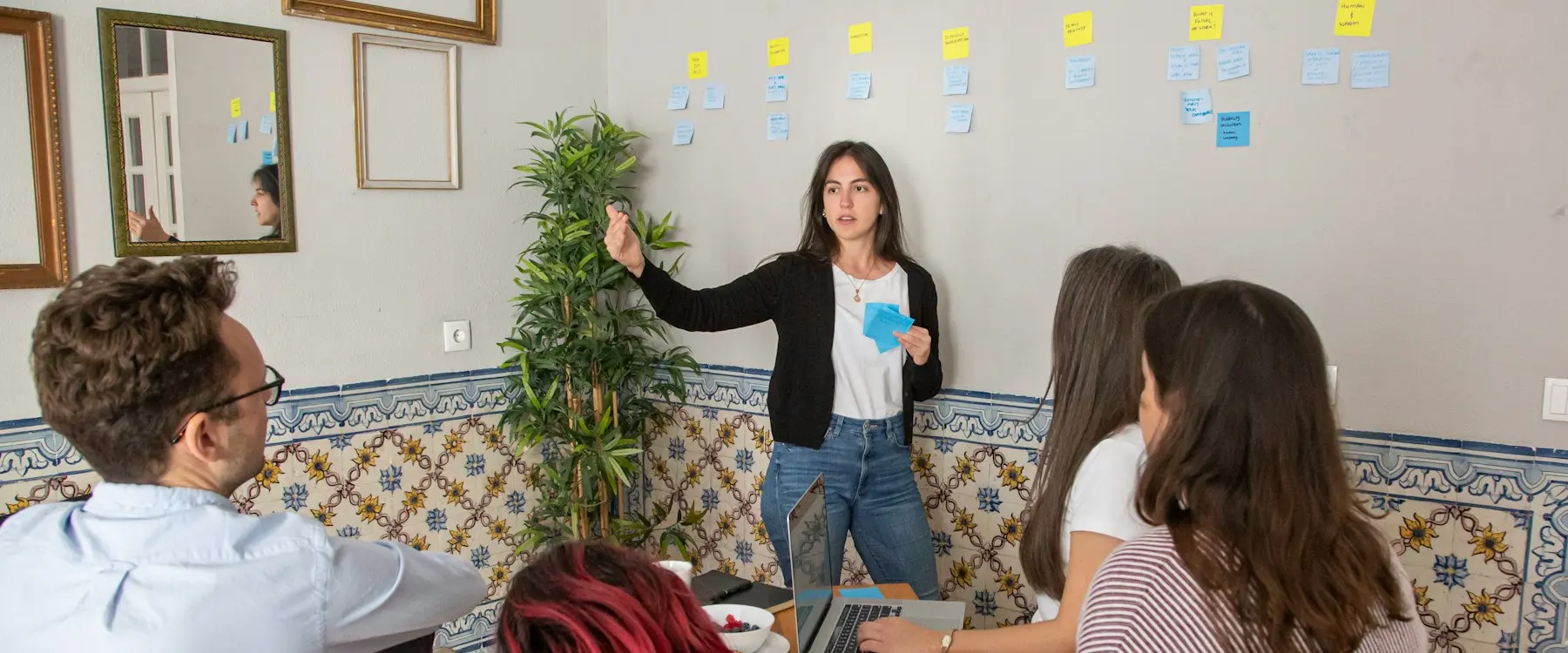
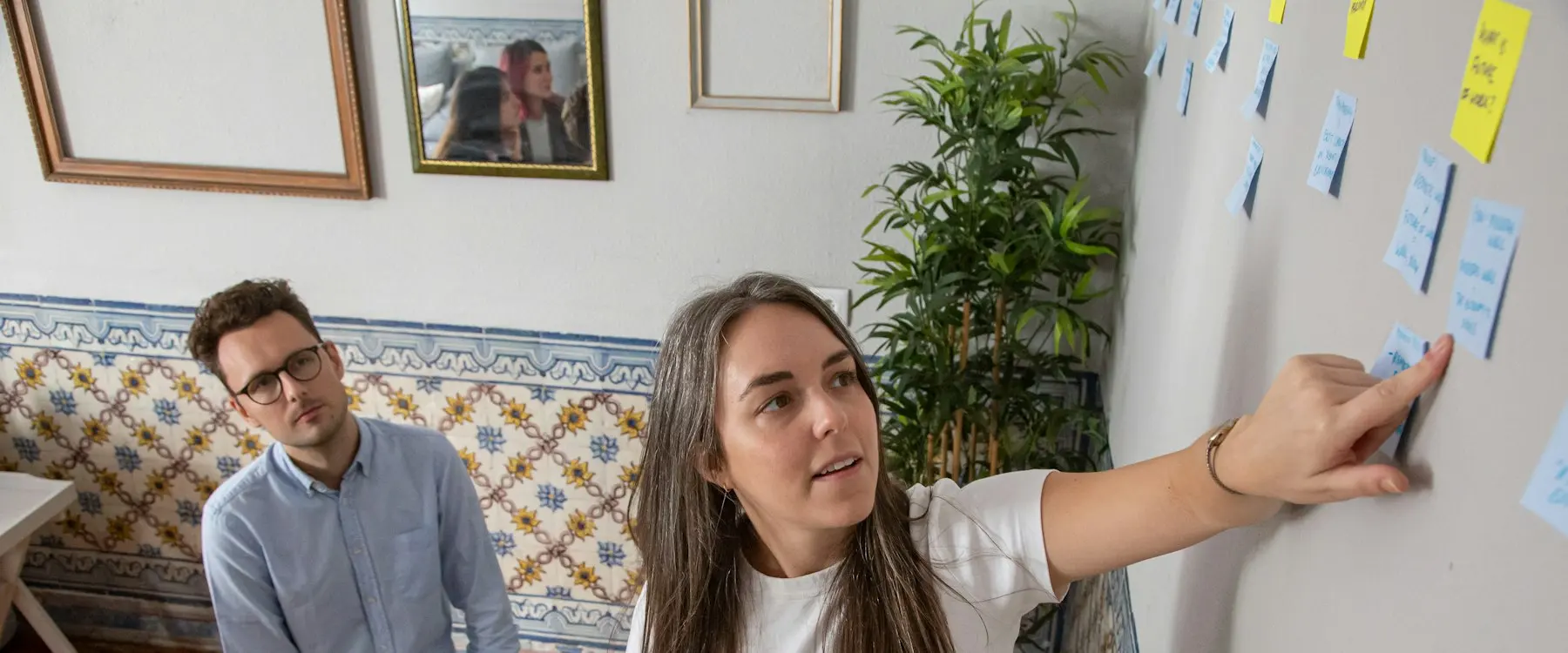
A facilitator leading a workshop for a team

Who does what

Technical oversight on every project.

On every project, our tech leads and CTO oversee our engineers’ work. They oversee the architecture and technical choices, set the code review standards and ensure continuity (documentation, handover). An identified point of contact steers the project with you, and Etixio is accountable for the quality of what is delivered.

You

You set priorities, make business trade-offs and approve deliveries. Your key people provide the context, the rules and the access needed.

Our tech leads and CTO

Architecture and technical choices, code review standards, technical steering, project continuity. In a dedicated team, our developers work on your priorities within your team; in a time and materials or fixed-price project, an Etixio lead runs the delivery.

The delivery team

Our engineers design, build, test and document, following the engineering standard described below.

Our engineering standard

The same practices on every project.

  • Systematic code review before every merge
  • Automated tests on critical business rules and user journeys
  • Continuous integration: every change is built and tested
  • Secrets kept out of the code
  • Separate environments (development, staging, production)
  • Living documentation, kept up to date with each release
  • For AI: evaluation datasets, quality and cost monitoring

Additional checks are chosen according to risk: critical business rules, data access, partner interfaces and takeover conditions. For an AI project, evaluations cover answers, failure cases, costs and changes in behavior.

AI coding assistants are part of this standard: a change suggested by AI is reviewed and tested like any other before it is merged. Accessible data and permitted actions are defined with your team; see our AI-assisted engineering.

Ownership and integration

You stay in control: your code, your access, your tools.

Everything remains yours: source code and repositories, access and accounts, tools, data and documentation. Our teams work inside your environment (your Git repositories, your ticketing tool, your environments, your security rules), and you can take back control at any time.

Two colleagues organizing tasks on a board

A shared responsibility

The framework adapts to the project; responsibilities stay explicit.

The depth of scoping and the pace of validation depend on the product. An MVP, a migration and an existing business application do not call for the same initial work. We specify the availability expected from your team, who makes the decisions and how changes are handled. Beyond a few months, a project is usually better run as a time and materials project, billed on time spent.

Frequently asked questions

Your questions.

What are the stages of a software project at Etixio?

Four stages, each with a result you can review. Scope uses and dependencies, design user journeys and architecture, build and verify feature by feature, then go live and hand over.

What is your role as a client?

You set priorities, make business trade-offs and approve deliveries. Your key people provide the context, the rules and the access needed. Etixio, through its tech leads and CTO, is accountable for the quality of what is delivered.

How are new requests handled during the project?

A new request is discussed based on its impact on the scope and on the rest of the delivery. Scope changes are reviewed along with their consequences before the commitment changes.

Is the process the same for an MVP and for an existing application?

The engineering standard is the same, but the depth of scoping and the pace of validation depend on the product. An MVP, a migration and an existing business application do not call for the same initial work; see IT project scoping.

Let’s talk about your project.

Tell us what you want to build, the users involved and your technical environment. Together, we will define the first scope to explore.

What are you looking for?