Workshops without intermediaries
Your business experts explain their rules and exceptions directly to the people who will code them. Questions get asked when they come up.
Francophone offshore · Madagascar & Mauritius
French-speaking offshore development at Etixio means a team of engineers in Madagascar and Mauritius who work with you in French, in writing and in meetings, 1 to 3 hours ahead of Paris. Our tech leads and CTO oversee the team. As a dedicated team, our developers join your team; on a project, we lead the delivery: either way, they build, deliver and evolve your software.
A free 30-minute video call, with no commitment, followed by a written summary with a ballpark estimate.
What a French-speaking team changes
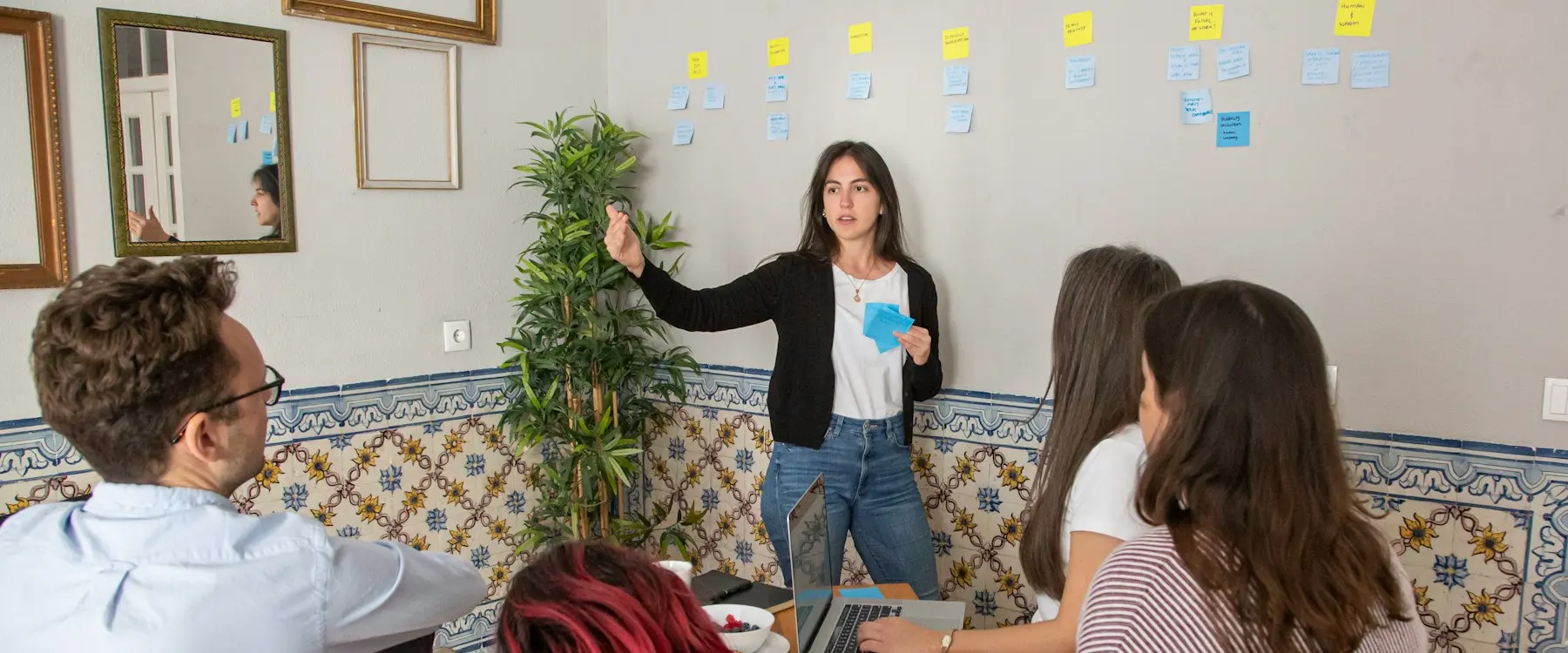
Many offshore providers speak French during the sales process. What matters is the language of the workshops, tickets, code reviews and conversations with your business experts. At Etixio, that language is French, from the first workshop to production, with developers who read your specifications and business rules as you wrote them.
A French-speaking team does not replace good organization. It does remove a layer of translation and waiting, which is often where the nuances of a business need get lost. The rest, architecture, reviews, testing and project management, comes from the framework we apply on every project.
Your business experts explain their rules and exceptions directly to the people who will code them. Questions get asked when they come up.
Requirements, tickets, annotated mockups, regulatory rules: your documents do not need translating or reinterpreting by an intermediate project manager.
Architecture decisions, release notes and technical documentation are written in your team’s language, so it can take over the code without depending on us.
A delivery risk, an ambiguity or technical debt is flagged precisely, in writing or in a meeting, without waiting for the weekly check-in.
Who it is for
Business software, regulatory platforms, SaaS for a French-speaking market: rules, labels and user conversations happen in French.
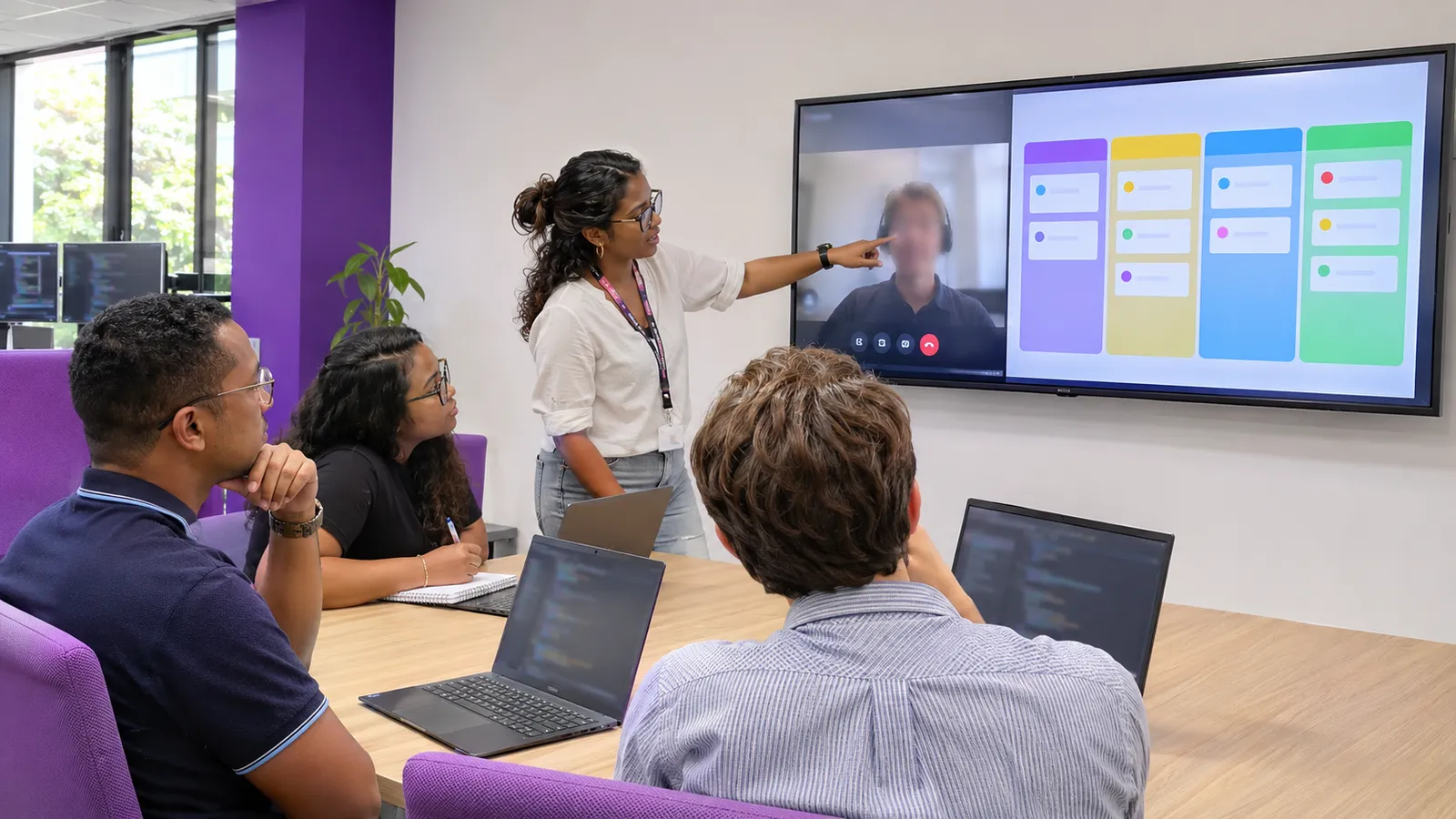
Hiring takes months. With a dedicated team, we present profiles of French-speaking developers, you interview them, and the ones you choose join your team and your rituals, without lengthening your hiring cycles. See the dedicated IT team.
Our teams in Mauritius work in French and English: one team can cover a French product and its international versions.
For a one-off skill, targeted staffing, short-term staff augmentation; for a project longer than about three months that you want to hand over, a time and materials project; for a short, stable scope with a fixed budget, a fixed-price IT project.
Two destinations, one organization
French is an official language alongside Malagasy, and the usual working language of tech companies. One to two hours ahead of Paris: the natural choice for day-to-day collaboration in French. See our developers in Madagascar.
French and English are both widely used. Two to three hours ahead of Paris: a team suited to bilingual products and international clients. See our developers in Mauritius.
Only one hour separates the two countries. The team’s composition and how it is split follow from the work to be done, not from the destination.
Morocco, Tunisia and Senegal also make it possible to work in French. We compare these destinations, criterion by criterion, in our article on which francophone offshore destination to choose.
Team & technologies
The team brings together the skills your product needs, and its composition changes with the phases of the project. Every team is overseen by our tech leads.
From first conversation to deliveries
Setup usually takes four to eight weeks, depending on the skills needed and how clear the first scope is, with a gradual ramp-up.
Users, roadmap, architecture, technical debt and security constraints: together we define the skills needed and the first delivery scope.
We choose, among our engineers, the right technical and teamwork skills, then introduce the team to yours before kickoff. Your point of contact is named from day one.
Code repositories, ticket tracking, environments, review rules and demos. The team adopts your methods, or we propose an agile framework.
Regular releases, code reviews, automated tests and demos. The team’s composition evolves with the topics actually on the roadmap.

Management, quality and security
Management. You set priorities and make the trade-offs; a named point of contact follows the project with you, and our tech leads and CTO oversee architecture, code reviews and continuity. See our organization.
Quality. Code review before every merge, automated tests on critical rules and journeys, continuous integration, separate environments and up-to-date documentation. See our commitments and our method.
Security. Role-based access, named accounts, secrets management and, where personal data is involved, a GDPR-compliant contractual framework.
Code ownership. Code, documentation and deliverables belong to you; they are pushed to your repositories as the work progresses. Your code, your access, your tools: everything remains yours.
Choosing a French-speaking offshore company
Language is an entry criterion. What then sets providers apart is how they oversee the work. Here are the questions we recommend asking, of us and of others.
Ask to speak with the developers themselves, not only with the salesperson or the project manager.
A team without a tech lead or code review produces code that will need rework. Ask who approves the architecture and the merges.
Automated tests, continuous integration, acceptance criteria, staging environments: ask to see how they are applied on a live project.
Code should go into your repositories, and accounts should be in your name. You should be able to take back control at any time.
Documentation, a supervised handover and an organized replacement limit the impact of a departure on the product.
Our guide on how to choose an IT outsourcing provider covers these criteria in detail.
Budget and first conversation
The budget depends on the profiles, their seniority, the size of the team and the destination. For a dedicated team, the model is a monthly cost per person, which gives clear visibility. Tell us about your product, your roadmap and the difficulties you face: we will propose an initial team composition and a first scope.
Frequently asked questions
It is software built by a team based in a distant country, working with you in French. At Etixio, our engineers are in Madagascar and Mauritius, and the company is based in France.
Yes. Workshops, tickets, code reviews and meetings happen in French. In Mauritius, the teams also work in English, which makes it possible to cover a bilingual product.
Nearshore refers to nearby countries, such as Morocco or Tunisia; offshore to more distant destinations, such as Madagascar or Mauritius. For daily work, the time difference matters more than distance: in Madagascar and Mauritius, teams are 1 to 3 hours ahead of Paris.
Madagascar: +2 h in winter, +1 h in summer. Mauritius: +3 h in winter, +2 h in summer. The teams start their day before yours, and the shared window covers most of your office hours.
Our tech leads and CTO oversee architecture, code reviews and standards, and are accountable for the quality of what is delivered. You keep control of priorities and business decisions.
Yes, that is the rule. We present the profiles of the engineers we have in mind, with what we have checked; you run the interviews you want and approve before kickoff. See how we practice selective recruitment of our engineers.
The cost depends on seniority, technology, the expected level of autonomy and the engagement model. See our offshore developer pricing and our article on the cost of an offshore development team.
Let’s talk about your product, in French or English.
Tell us what you want to build, who the users are and your technical environment. Together we will define the scope and the team composition.