A goal and a starting scope
What the project must make possible, for whom, and the first features to deliver. It is the shared starting point, not a frozen contract.
Our service
A time and materials project is a project you hand over to Etixio, with a goal, a starting scope and one of our people leading it, billed on time spent. Beyond about three months, scope always changes: this model keeps that flexibility without giving up our commitment to running the project and to the quality delivered.
A free 30-minute video call, with no commitment, followed by a written summary with a ballpark estimate.
What it is
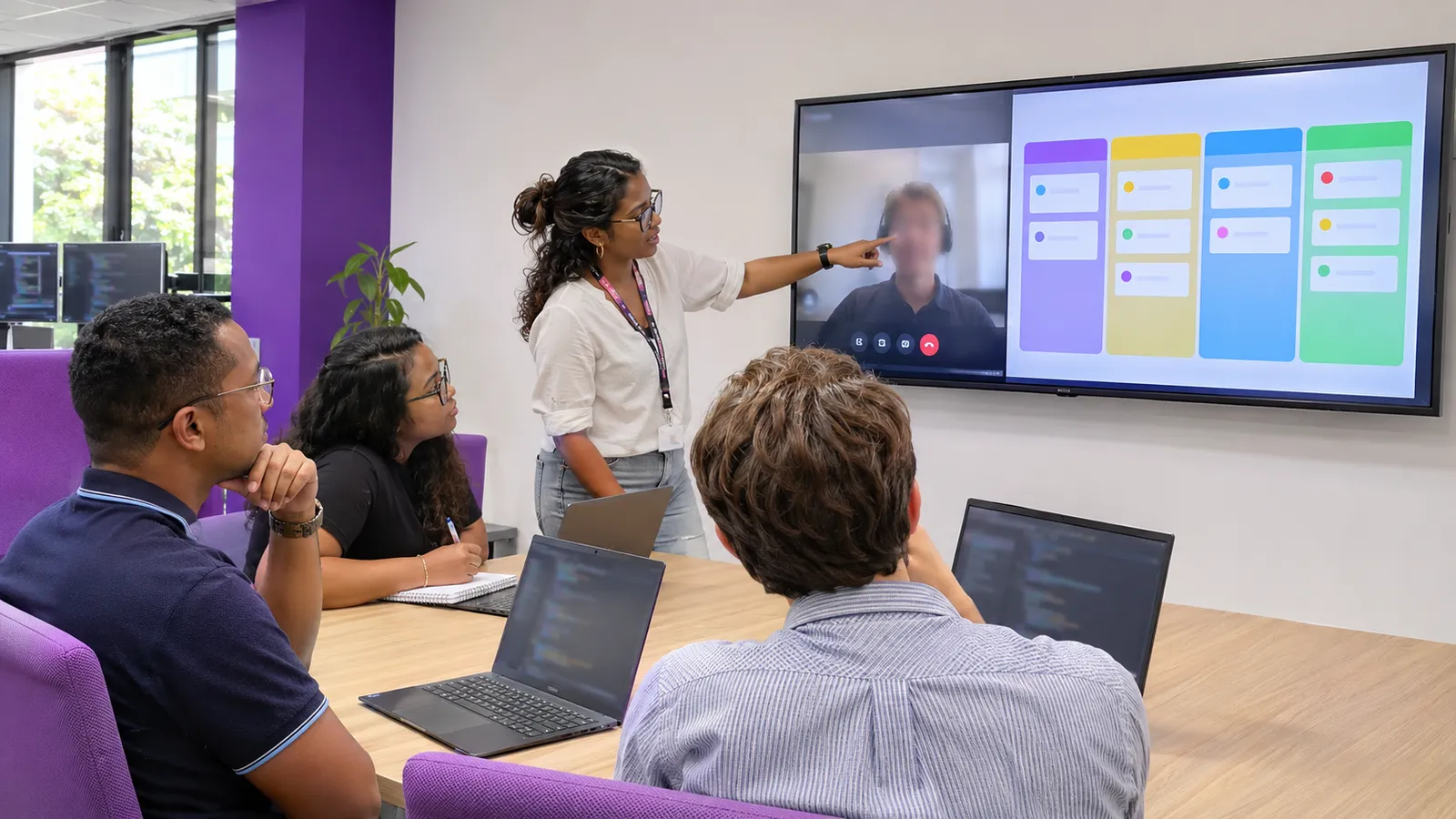
A time and materials project sits between a dedicated team and a fixed-price project. As with fixed price, you hand us a project: an application to build, a redesign, a platform to evolve, an AI project to take to production. An Etixio lead, project manager or tech lead, runs it and is accountable for it. As with time and materials, billing is based on the time the team spends, which lets the scope evolve with what you learn along the way.
It is the model we propose for most projects longer than about three months. It relies on our French-speaking engineers in Madagascar and Mauritius, 1 to 3 hours ahead of Paris.
What the project must make possible, for whom, and the first features to deliver. It is the shared starting point, not a frozen contract.
They organize the team, keep the delivery pace, prepare the trade-offs and report to you on progress and time consumed.
You pay for the time actually spent on the project, tracked and shared every period.

Why this model
On a short project, you can describe exactly what will be delivered and commit to a price. Over several months, scope always moves: users react to the first versions, business priorities change, a technical constraint appears. A pure fixed price would then force you to freeze everything upfront, or to negotiate a change order for every change.
A scope described too early locks in choices you would have made differently three months later. On a long project, fixed price protects the price at the expense of flexibility.
Every change becomes a negotiation. A time and materials project replaces that back-and-forth with priority trade-offs, at the pace of releases.
At each stage you decide what matters most, seeing what has already been delivered and what has been consumed.
What stays committed
Billing on time spent does not mean we sell hours without responsibility. We remain committed to running the project and to the quality of what is delivered.
What stays flexible: priorities and scope. You can add, remove or reorder features during the project. The Etixio lead measures the effect on schedule and budget before you decide.
The right model
Our developers join your team; you steer the product and organize the day-to-day work. See the dedicated IT team and, for a short need on a specific skill, offshore IT staffing.
You hand us the project. An Etixio lead runs it and organizes the team; you set the goal and the priorities. Billed on time spent, for a project longer than about three months.
A short, stable scope, from a few weeks to about three months, a firm price, defined deliverables and acceptance. See the fixed-price IT project.
The models often follow one another. A first fixed-price phase (scoping, prototype) comes before a time and materials project; at the end of the project, the team can continue as a dedicated team or under application maintenance.
How it starts
Goal, users, starting scope, technical and security constraints, first priorities. See IT project scoping.
An effort estimate for the starting scope, the team composition, the delivery pace and the indicators tracked. An IT project estimate can come before this step.
We put the team together from our engineers according to the work to be done (development, QA, DevOps, data, AI) and introduce it to you. Setup usually takes four to eight weeks.
Regular releases, demos, priority reviews with you and updates on progress and consumption.
Production release, documentation and handover; then maintenance, continuation as a dedicated team or takeover by your own team.

AI in the project
The project can be about AI itself: an assistant or agent connected to your tools, search across your documents, taking an AI POC to production. In that case, scope evolves even more because you learn by measuring, and a time and materials project fits well. Together we set an evaluation set, then track quality and costs with every release. See our enterprise AI solutions.
AI is also part of how we work: our developers use supervised coding assistants, with systematic human review and confidentiality rules agreed with you.
Ownership and integration
Everything remains yours: source code and repositories, access and accounts, tools, data and documentation. The team works inside your environment (your Git repositories, your ticketing tool, your security rules), and you can take back control at any time.
Frequently asked questions
A software project handed to a provider, with a goal, a starting scope and a named lead, but billed on time spent rather than at a firm price. At Etixio, a project manager or tech lead runs the project and our French-speaking engineers in Madagascar and Mauritius deliver it.
With a starting estimate, then shared tracking of consumption every period, compared with what has been delivered. The Etixio lead flags gaps early and proposes trade-offs on scope or priorities. You can set an overall envelope and decide on next steps at each stage. For orders of magnitude, see our offshore developer rates.
You set the goal and the priorities and approve what is delivered. The Etixio lead organizes the team, runs the project and prepares the trade-offs for you. Our tech leads and CTO own the technical choices and are accountable for quality.
With a dedicated team (staff augmentation), our developers join your team and you organize their day-to-day work. In a time and materials project, you hand us the project: an Etixio lead runs it and organizes the team.
Yes, it is common. A first fixed-price phase (scoping, prototype, first module) validates the approach; the longer, more evolving part continues as a time and materials project with the same team.
That is expected. The Etixio lead assesses the effect of the change on schedule and consumption, then you decide. There is no change order to negotiate for each change.
You do. Source code, repositories, access, data and documentation remain yours, and the team works inside your environment.
After scoping, team setup usually takes four to eight weeks, depending on the skills required and how clear the starting scope is.
Let’s talk about your project.
Tell us what you want to build, over what timeframe and in what environment. We will tell you whether a time and materials project, a fixed price or a dedicated team fits best.