Keep the traveler product roadmap on track
Ship the expected features on web and mobile, and improve existing user journeys.
Case study · Gorilla eSIM
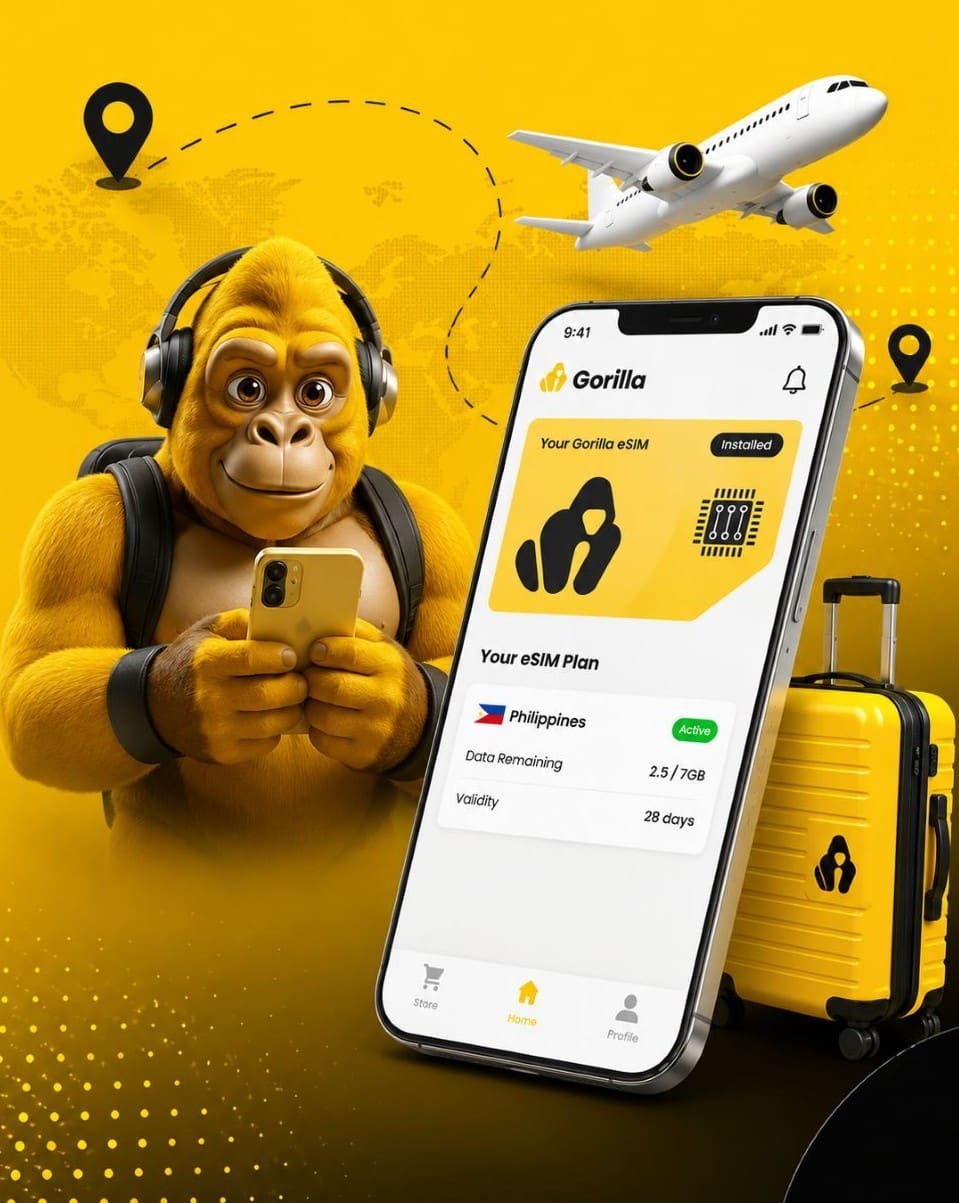
eSIM development for Gorilla: we evolve the web and mobile product for travelers, and we built a B2B partner affiliate platform from scratch. A single product team owns both scopes, from design to testing.
Gorilla eSIM, travel data plan provider
Web & mobile product, B2B affiliate platform
Java, Quarkus, React, Flutter
5 people, run as a single team
The client
Gorilla eSIM offers travelers international data plans in more than 150 countries. Its solution keeps them connected with no roaming charges and no physical SIM card.
The product serves travelers first, on the web and on mobile. Gorilla also wanted partners to distribute its plans, which called for a second, entirely new user journey.
The challenge
Ship the expected features on web and mobile, and improve existing user journeys.
A new acquisition channel, driven by Gorilla’s partners.
A single product team and a single point of governance, so both journeys move forward consistently.
Without compromising on the quality of the work.
B2C web and mobile product improvements.
Design and development of the B2B affiliate platform.
UX/UI, development, product management and QA.
What we built
We work across the full lifecycle of each change, from user journey design to back-end and front-end development, the mobile app and testing before release. The affiliate platform was built from scratch, from the architecture decisions to the screens partners use.
Design and development of the B2B platform, from architecture work to partner interfaces.
Development of traveler features and improvements to existing journeys, on the web and in the app.
Interface design and integration, product coordination and testing of every change.
Team and organization
Five people cover back-end and full-stack development, design and front-end, product management and QA. They share the same rituals, the same tools and a single point of governance on Gorilla’s side: from the client’s point of view, there is one product team.
The team brings together engineers from our teams in Madagascar and Mauritius; on this English-language project, our team in Vietnam supports it on back-end and full-stack development. This is how we deliver, through a dedicated IT team: a stable team, embedded in the product, that keeps its knowledge from one release to the next.
2 developers. Services, affiliate platform and integrations.
1 designer / front-end developer. Web and mobile journeys and interfaces.
1 Product Manager · 1 QA engineer. Priorities, coordination and release testing.
Technologies used
Back-end services run on Java and Quarkus, web interfaces on React, and the mobile app on Flutter, with a shared codebase for iOS and Android. Around the code, UX/UI, product management and QA are part of the same team, so every change is designed, built and tested in one place.
Outcome and current status
Our team currently supports the ongoing development of both the traveler product and the partner platform.
Frequently asked questions
Two scopes delivered by the same team. On one side, web and mobile improvements to the product for travelers. On the other, a B2B affiliate platform built from scratch, from architecture work to partner interfaces.
Java and Quarkus for the back end, React for web interfaces and Flutter for the iOS and Android app. The project also involves UX/UI, product management and QA.
Five people (two back-end and full-stack developers, one designer / front-end developer, one Product Manager and one QA engineer) spread across several of our sites and run as a single team, with a single point of governance on Gorilla’s side.
The product evolves continuously and the affiliate platform was built from scratch. A stable team keeps its product knowledge from one release to the next, so nothing has to be re-explained with each change. See our dedicated IT team offer.
Yes. We design and build mobile apps, including with Flutter, such as the app for the secure document sharing platform we built for a SaaS vendor.
Tell us about your users, your software and what you want to build or improve.