A high-performing, scalable platform
Support the growth of the product and its uses.
Case study · Real estate data platform
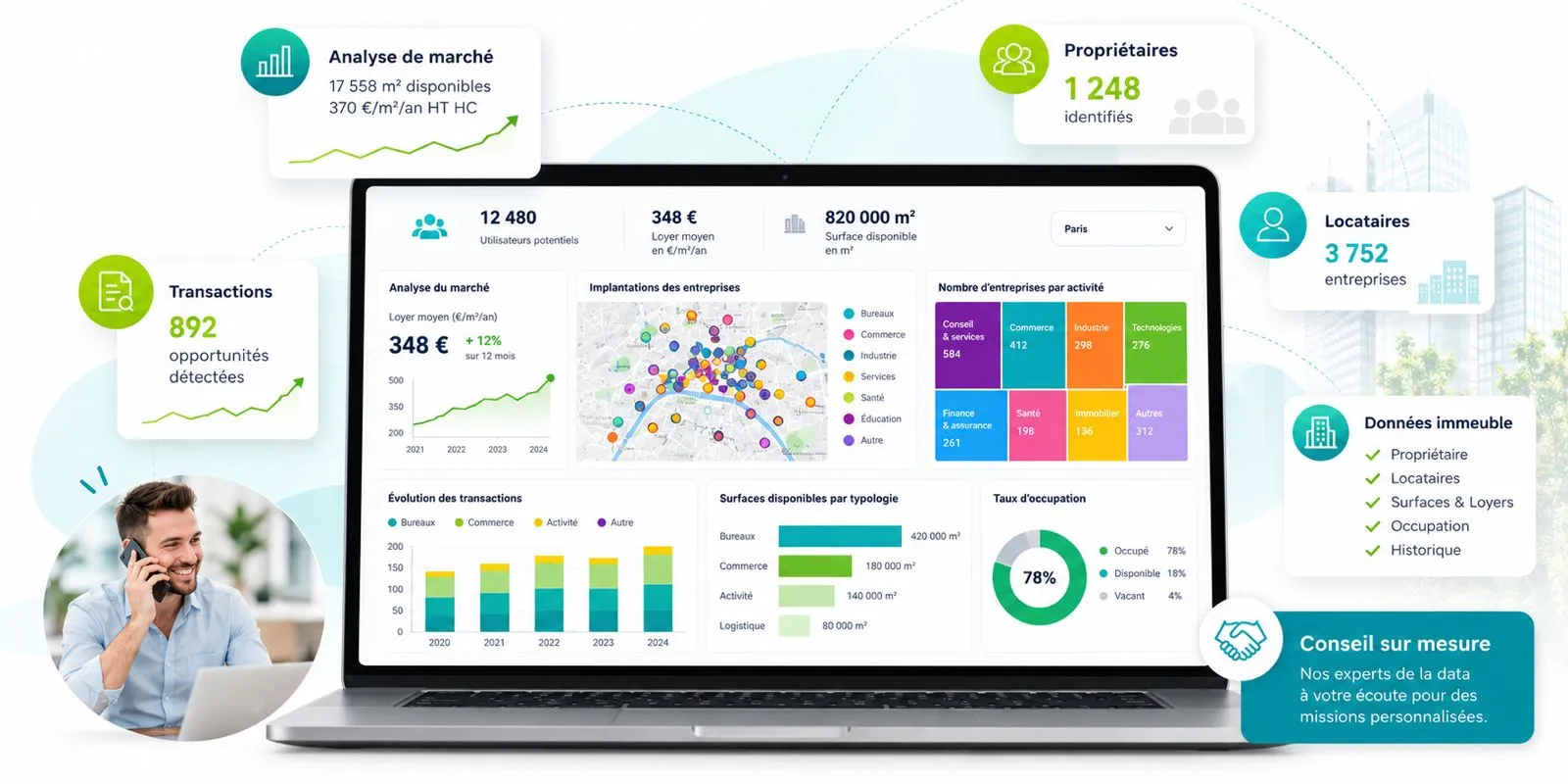
A real estate data platform developed and enhanced continuously by our dedicated team, spread across Madagascar and Mauritius. We build the web application and its analytics tools, with quality assurance built into every release.
The client
A company specializing in collecting, enriching and using real estate data for professionals. Its platform centralizes and analyzes many data sources to support prospecting, investment and transactions.
The value of the service lies in the quality of the data it delivers. The platform therefore has to grow with the product without weakening what already works.
The challenge
Support the growth of the product and its uses.
Centralize and deliver real estate data professionals can use directly.
A team whose size can adjust to the product’s needs.
Test every change before it goes live.
For real estate professionals, data drives decisions: choosing an area to prospect, assessing an investment, preparing a transaction. A wrong value or an incomplete analysis does not always trigger a visible error, but it can skew a decision.
That is what makes growth tricky. Every new data source or analytics feature touches data that is already in use, so growing the platform means checking that what worked keeps working.
What we built
Development of the real estate data platform and its features.
Development of the tools used to work with real estate data.
Functional testing and ongoing hardening of the development work.
Features are developed, tested and released by the same team, which builds up knowledge of the product and its data over time.
Team and organization
3 developers. Platform development.
2 developers · 1 QA engineer. Development, testing and quality assurance.
Both sites share the same backlog, tools and leadership. The project runs on a time and materials basis, with a dedicated IT team: engineers in Madagascar and Mauritius, stable over time and embedded in the client’s product.
Skills involved
The project involves web development, for the application and its analytics tools, and quality assurance, to test every change before release. It builds on our custom web development and BI & data offers.
How we work
A team spread across two sites needs shared practices. Our engineers follow the same engineering standard on every project: our tech leads and CTO oversee the architecture, code review standards and product continuity.
In our distributed teams, both sites work from the same backlog, with the same tools and the same rituals (regular check-ins, demos, backlog reviews).
Every change is reviewed before merging, then built and tested automatically. Automated tests complement the QA engineer’s functional testing on business rules and critical journeys.
Our standard keeps development, staging and production apart, so that a change can be checked before it reaches users.
Our teams in Madagascar and Mauritius are French-speaking and also work in English, 1 to 3 hours ahead of Paris depending on the season and the country. The two islands are only one hour apart.
See our method and our commitment to structured technical leadership.
Outcome and current status
Our team currently handles the continuous development of the platform.
Similar situations
See our approach to real estate data platform development.
A stable team whose size follows the product’s needs helps you evolve your product, release after release.
Reviews, tests and separate environments are part of software project risk management, before risks become blockers.
We help you add AI features to your product, starting from a specific use case connected to your data.
Frequently asked questions
The real estate data platform’s web application and its data analytics tools, with built-in quality assurance to make every change reliable.
Six people across two sites. Three developers in Madagascar, two developers and one QA engineer in Mauritius, working from one backlog under the same leadership.
The two-site setup makes it possible to adjust the team’s capacity to the roadmap while keeping a single point of leadership.
They run functional tests and help continuously harden the development work, so that every release is tested. See our QA and testing expertise.
Madagascar is on UTC+3, one to two hours ahead of Paris depending on the season; Mauritius is on UTC+4, two to three hours ahead. Working days overlap widely, and the two sites are only one hour apart.
By combining several checks: code review before every merge, automated tests run by continuous integration, separate environments, then functional testing by the team’s QA engineer before go-live. This is our engineering standard.
What project do you want to build?
Tell us about your users, your software and what you want to build or improve.