Clarify the problem and priority use cases
Who is the user, what task do they want to accomplish and what needs to change for them?
Your project
Turn your hypotheses into a concrete scope, then into a first product you can test and evolve. The budget stays focused on what you need to learn.
A free 30-minute video call, with no commitment, followed by a written summary with a ballpark estimate.

Your context
An idea becomes a project once a user, a problem and a first use case can be described. We help you move from intent to a testable scope. The challenge is to build enough to put the product to a real-world test, while keeping the budget focused on the main hypothesis.
Who is the user, what task do they want to accomplish and what needs to change for them?
Mockups make it possible to discuss the journey before committing to development.
The first scope, its budget and the way early trials will be judged are set in advance.
Structural foundations are laid; the rest waits for user feedback.
What we deliver
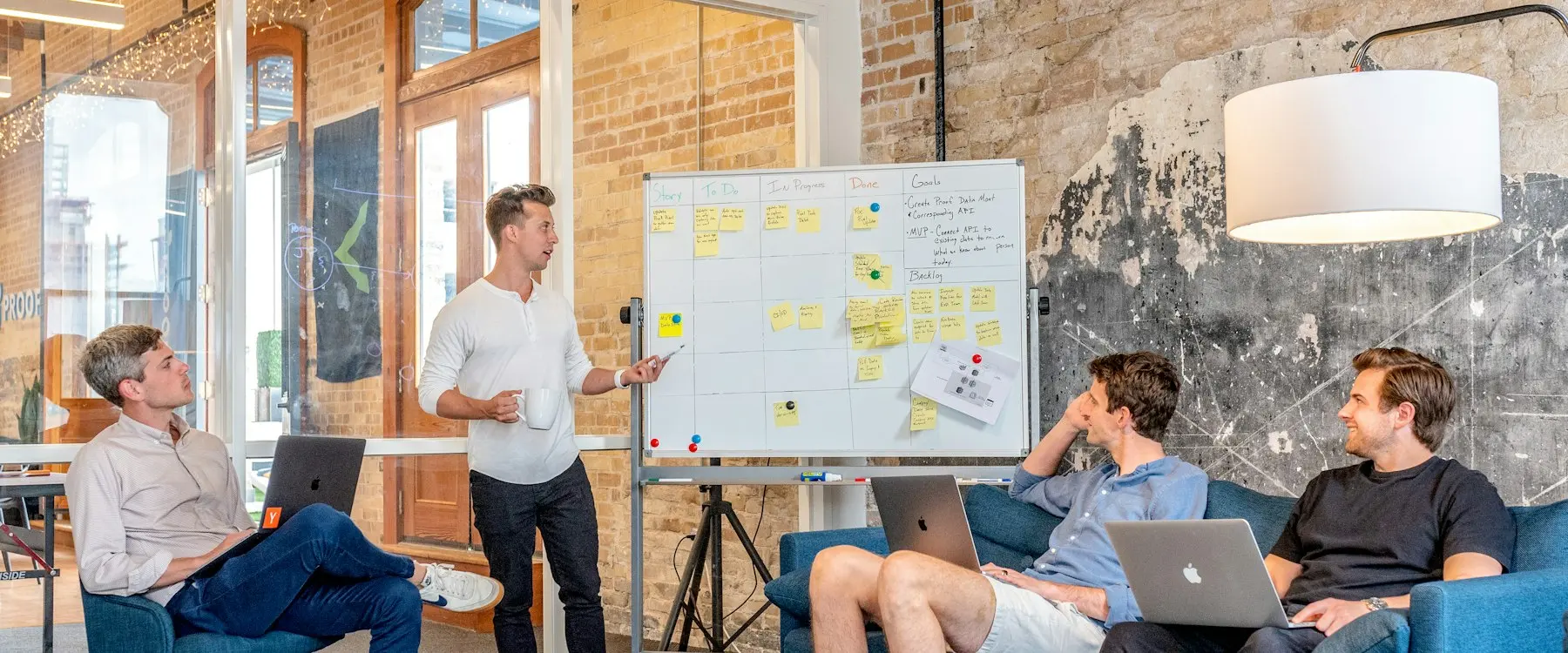
Launching a digital product means taking an idea through scoping, design, development and a first release. We cover each of these steps with the same team, so the decisions made during scoping are carried through to the product your first users see.
Journeys, rules, dependencies and acceptance criteria brought together in IT project scoping that serves as the basis for the estimate.
Journey and interface design with a task-centered UX/UI approach.
Essential features, accounts and access, and the integrations needed for first use, on the web or on mobile.
Deployment, monitoring and feedback collected on concrete tasks to decide what comes next.
Working together
Scoping brings together journeys, rules and dependencies. We then build the essential features, and feedback is collected to decide the next steps of the roadmap.
Target user, problem, first journey and success criteria.
The journey is discussed on mockups, then adjusted before development starts.
Features are delivered and demonstrated regularly, with trade-offs made visible.
Go-live, feedback collection, then prioritization of improvements by value and cost.
Delivery is carried out by our French-speaking engineers based in Madagascar and Mauritius, overseen by our tech leads and CTO, with regular demos throughout the project. An MVP with a short scope is usually done at a fixed price; what follows can continue as a time and materials project or with a dedicated team on a time and materials basis.
Watch points
It must remain usable and understandable even with a limited scope.
We distinguish what can easily be reworked from the foundations that need a decision from the start, such as data and authentication.
External services, hosting and maintenance are included in the estimate.
An app generated quickly validates an intent; it often has to be reworked before it can welcome real users.
If your value proposition relies on AI, the product’s AI features are scoped from the MVP onward, along with their usage costs; if an AI prototype already exists, we can take it over and bring it to production.
Learn more
Frequently asked questions
An MVP (minimum viable product) is a first version with just enough to test a value proposition with real users. Its scope is limited, but it must be usable and reliable within that scope.
The cost depends on the core journey, the integrations and the target platforms. Scoping makes it possible to estimate it on an explicit scope, separating build, external services and running costs.
Yes. We look at what can be kept and what needs to be reworked, especially accounts, permissions, data and deployment, before going further.
It depends on the use case. A web product is often quicker to test; a mobile app is justified when people use it on the move or when it needs phone features.
Feedback from the first users is weighed against the cost of possible improvements. You decide the next steps of the roadmap on that basis: enrich the journey, open a new one or rework some foundations.
Other needs
A business application must remain maintainable, performant and suited to how it is used. Start by understanding the existing system before deciding what comes next.
How we help you ↗
Evolving software over time takes a clear architecture, tested releases and business knowledge that stays within the project. We help your product keep moving without losing control of what already exists.
How we help you ↗
Security and quality are built into scoping, code, access management and delivery practices. The first step is knowing what really threatens your next release.
How we help you ↗Let’s talk about your project.
Tell us what you want to build, who the users are and what your technical environment looks like. Together, we’ll define the first scope to explore.